When Growth Exposes the Cracks
You finally land that major contract. The one you’ve been chasing for months. Revenue projections soar. The team celebrates. Then Monday morning arrives, and reality hits: nobody’s quite sure how to deliver this at scale.
The sales process that worked brilliantly for ten clients starts breaking at twenty. The onboarding that felt thorough when you did it personally becomes a game of telephone when delegated. The quality that made your reputation starts slipping because different team members interpret “our way” differently. Growth, it turns out, doesn’t just expose operational weaknesses—it multiplies them.
This is the moment when successful businesses split into two paths. Some hire frantically, throw bodies at problems, and watch margins evaporate as chaos scales faster than revenue. Others pause, step back, and ask a different question: “What if we created an operations manual for business that captured how this actually works?”
Beyond the Binder: What Are Business Operating Procedures?
Let’s clear up what we’re not talking about. Not the dusty three-ring binder from 1997 that nobody’s opened since the office moved. Not the 200-page policy document written by lawyers for lawyers. Not the rigid, soul-crushing bureaucracy manual that turns thinking humans into robots.
A modern operations manual is something different entirely. It’s the living documentation of how your business processes actually run—not how you wish they ran, not how the consultant’s framework says they should run, but how work genuinely flows when things are going well. It’s the business process documentation that answers questions like: “How do we make decisions here?” “What happens when a client complains?” “How do we know if this project is on track?” “What does ‘done’ actually look like?”
Think of it as your business’s operating system. Not a straitjacket, but a platform. Not a script, but a score. The thing that allows improvisation because the fundamentals are solid. The framework that paradoxically creates freedom through operational clarity.
From Tribal Knowledge to Intelligent Systems
Here’s the uncomfortable truth about “tribal knowledge”—the undocumented expertise living in people’s heads. It feels valuable. It feels like competitive advantage. It’s actually an operational time bomb.
When your best operations manager carries the entire workflow in their head, you don’t have a standardised business process—you have a single point of failure.
When only Sandra knows how to handle the tricky billing scenarios, Sandra can never take a proper holiday. When the sales process only works because James has magic touch, you can’t scale sales beyond James.
Operations manuals transform tribal knowledge into organisational intelligence. Document the workflow, and suddenly it becomes visible. Make it visible, and you can improve it. Improve it, and you can automate it.
This is where AI and business automation actually become possible. You can’t automate what you can’t describe. You can’t optimise what isn’t visible. The businesses successfully implementing intelligent automation aren’t the ones with the biggest technology budgets—they’re the ones who documented their business processes first. They knew what actually happened before they tried to make it happen faster.
The feedback loop works both ways. When you implement a CRM or workflow system, it often reveals gaps in your operational documentation. The system asks: “What happens next?” And you realise nobody quite agreed on the answer. So you document it. The system gets better. The manual gets better. The intelligence compounds.
The Execution Bridge: Turning Strategy into Repeatable Action
Every January, leadership teams gather for strategy sessions. Vision statements are crafted. Growth targets are set. Market positioning is debated. Everyone leaves energised and aligned. By February, the strategy document is filed away, and everyone’s back to fighting fires.
The gap between strategy and execution isn’t usually about bad strategy. It’s about the missing middle—the bridge that translates “we’re going to focus on customer retention” into “therefore, here’s exactly how our customer success operating procedures now work.”
Operations manuals are that bridge. They answer the question: “Given our strategic priorities, how does work actually flow differently now?” They force specificity. “Improve customer service” is a strategic intention. “Within 24 hours of a complaint, the account manager calls the client, documents the issue in the CRM, and escalates to the operations director if unresolved within 48 hours”—that’s an operational standard.
This is why transformation initiatives fail so spectacularly. The transformation plan is beautiful. The change management presentations are compelling. But nobody updated the business operating procedures. So when new priorities collide with old processes, the old processes win. They’re documented (even if only in habit). The new approach is just words in a slide deck.
Businesses that scale successfully don’t have better strategies—they have tighter connections between strategic intent and operational reality. The operations manual is that connection. It’s where “what we’ve decided” becomes “how we actually work.”
Embedding Values into Operations
Sustainability commitments. Purpose statements. ESG frameworks. Most businesses have them. Fewer businesses actually live them when it’s inconvenient. The gap, once again, is operational documentation.
“We’re committed to reducing our carbon footprint” sounds impressive. But what does it mean on Tuesday afternoon when the team is choosing suppliers? Without an operating standard—documented, clear, non-negotiable—it means whatever feels right in the moment. Which means it means nothing.
Operations manuals make purpose operational. They answer: “How do we actually make decisions that align with our values when those decisions cost more or take longer?” They document the trade-offs you’re willing to make and the lines you won’t cross.
This isn’t just ethics—it’s risk management. When your business operating procedures say “we verify supplier sustainability credentials before onboarding,” and someone skips that step, you catch it. When your manual says “we report these ESG metrics quarterly,” and the data isn’t there, you know something broke.
Purpose without process documentation is performance art. Purpose with process is competitive advantage.
The businesses genuinely embedding sustainability aren’t the ones with the most inspiring mission statements. They’re the ones who’ve integrated ESG considerations into their operational standards, procurement processes, supplier selection criteria, and project approval workflows. They’ve made it part of how work gets done, not an add-on that gets skipped under pressure.
The Talent Multiplier: How Operations Manuals Accelerate Onboarding
Good people leave jobs where they’re constantly confused about expectations. They stay where they know what good looks like, have clarity about how to succeed, and can see themselves progressing.
Operations manuals are talent infrastructure. They’re the difference between a new hire spending three months figuring out “how things work around here” versus hitting productivity in three weeks. They’re the difference between “you’ll pick it up” and “here’s exactly how we do this, here’s why, and here’s how you’ll know you’re doing it well.”
This compounds in ways that aren’t obvious. When onboarding is documented, it’s consistent. When it’s consistent, you can measure if someone’s progressing normally or needs support. When business processes are clear, people gain confidence faster. When they’re confident, they take initiative. When they take initiative within a clear framework, you get innovation without chaos.
The counterintuitive bit: process documentation doesn’t limit autonomy—it enables it. When the fundamentals are clear, people don’t need to ask permission for every decision. They know what outcomes matter and what constraints exist. The operations manual says “here’s how we handle standard situations,” which frees people to focus on non-standard situations where judgment actually matters.
Great culture doesn’t happen because of pizza Fridays. It happens when people know what’s expected, have the tools to deliver it, and can see their impact.
Business operating procedures are the infrastructure that makes that possible.
What Gets Documented Gets Measured
You can’t manage what you can’t measure. And you can’t measure what you can’t see. Operations manuals make work visible.
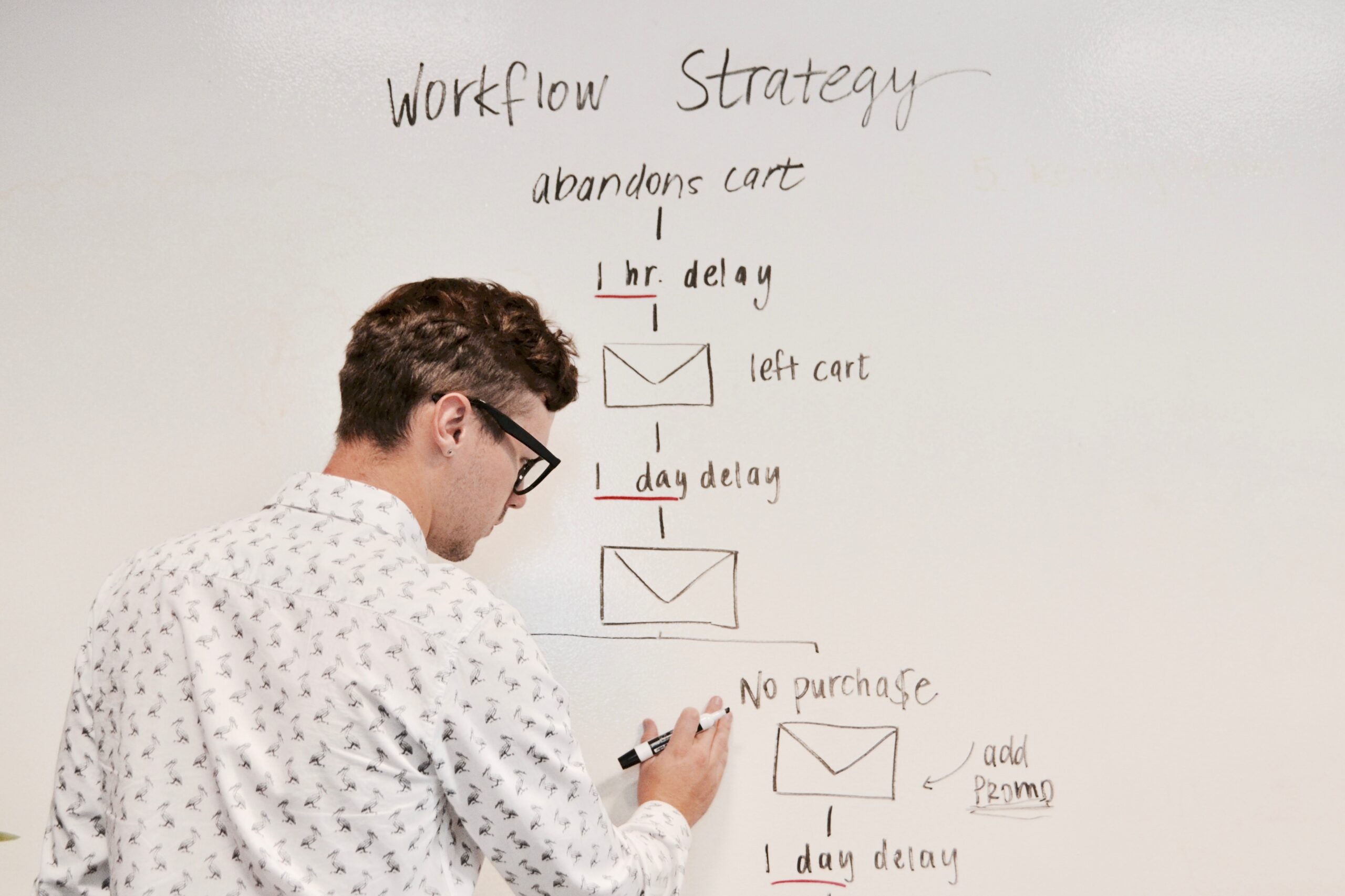
When your sales process is documented—these are the stages, these are the activities, this is how long each typically takes—you can suddenly see where deals are getting stuck. Not theoretically, but specifically. “We’re losing them between proposal and negotiation” becomes an actionable insight.
When your delivery process is mapped—these are the handoffs, these are the quality checks, these are the dependencies—bottlenecks become obvious. Not when the project’s already late, but when the pattern emerges. “Every project gets stuck waiting for design approval” becomes a problem you can solve.
The ROI of operational documentation isn’t usually measured directly because it shows up everywhere else. In reduced training time. In faster problem identification. In fewer errors and less rework. In the ability to scale delivery without scaling headcount proportionally. In decisions made faster because the framework’s clear. In opportunities spotted because the baseline’s visible.
Performance metrics without process documentation are just numbers floating in space. You know revenue is down, but you don’t know where the leak is. You know customer satisfaction dropped, but you don’t know which part of the experience broke. Document the business process, and the metrics gain context. They point at specific points in the system where attention is needed.
This is where OKRs and performance frameworks actually work. When you’re measuring against a documented business process, “improve conversion rate by 15%” becomes actionable because you know the specific stages where conversion happens and the specific activities that influence it. Without the operations manual, it’s just a wish dressed as a metric.
The Compounding Effect: When All Five Pillars Work Together
Here’s where it gets interesting. Operations manuals aren’t just useful for operations. They’re the connective tissue that makes everything else work.
Your AI implementation needs documented business processes to know what to automate. Your strategic transformation needs operational standards to translate into action. Your sustainability commitments need procedural clarity to become real.
Your culture needs documented expectations to feel fair. Your performance measurement needs process visibility to be meaningful.
Each pillar reinforces the others through operational documentation. Strategy informs which processes matter most. Process excellence reveals what to measure. Measurement shows where people need support. Talent development strengthens process execution. Strong execution makes transformation possible. Transformation advances strategic goals.
The businesses scaling successfully aren’t necessarily doing something revolutionary. They’re doing something consistent. They’ve documented how work flows, created feedback loops that improve it, aligned people around it, measured what matters, and kept iterating. The compounding effect over twelve months is dramatic. Over three years, it’s transformational.
This is the difference between growth that exhausts you and growth that energises you.
Between hiring more people to handle the chaos and hiring more people because the system’s ready to scale. Between wondering why things keep breaking and knowing exactly where to focus next.
How to Create an Operations Manual: Where to Begin
If you’re looking at your business thinking “we need to document everything,” stop. That path leads to a project that never finishes and a document nobody uses.
Start with pain. Where does confusion happen repeatedly? Where do new hires get stuck? Where do projects typically derail? Where do quality issues emerge? Where do bottlenecks slow everything down? Start there.
Document one core workflow completely before moving to the next. Pick something that happens frequently, involves multiple people, and when it goes wrong, hurts.
Maybe it’s your sales-to-delivery handoff. Maybe it’s how you handle customer issues. Maybe it’s your project approval process. Document it as it actually works today—not how you wish it worked, not how the ideal version would work, but what genuinely happens when things go well.
Then use it. Have new people follow it. Have experienced people check against it. The gaps will reveal themselves quickly. The manual says X happens, but actually Y happens. Great—now you know where the documentation and reality diverge. Update it. Keep using it. Keep improving it.
Common Pitfalls When Creating Business Operating Procedures:
- Don’t aim for perfection
- Don’t document all business processes at once
- Don’t write it and forget it
- Don’t make it so detailed that nobody can follow it
- Don’t make it so vague that it’s useless
- Don’t let it become the legal team’s compliance document
- Don’t let perfect formatting delay useful content
The operations manual that exists and gets used beats the comprehensive manual that’s perpetually “in progress.” Start messy. Get specific. Test with real people. Iterate based on what breaks. Documentation is like software—version 1.0 needs to ship so you can learn what version 2.0 needs to be.
Scale Isn’t About Working Harder—It’s About Working Clearer
The businesses struggling to scale are often working incredibly hard. Long hours. Dedicated people. Real expertise. They’re just remaking decisions that should’ve been made once. Solving problems that should’ve been solved already. Training new people on things that should’ve been documented.
The businesses scaling smoothly aren’t necessarily smarter or more talented. They’ve just invested in operational clarity. They’ve documented what good looks like, captured how work flows, created standards that compound, built systems that learn.
An operations manual for business isn’t bureaucracy—it’s freedom. Freedom from constantly reinventing the basics. Freedom to focus expertise where it matters.
Freedom to scale without losing what made you good in the first place. Freedom to grow without chaos.
The question isn’t whether you’ll document your business processes. The question is whether you’ll do it intentionally now, or frantically later when growth is already breaking things. One path lets you scale smarter. The other ensures you’ll keep scaling harder.